ASANA IN FUNCTION — SERIES 1 OF 6
The Crucial Difference Between Position and Posture in Yoga
Why your body’s arrangement in space is only half the story — and how understanding the other half transforms your practice.
By Kamal & Tatiana · Eco Yoga Sanctuary, Jumeirah · 8 min read
“She had practiced yoga for seven years. She knew every cue, every alignment instruction. But the moment she stopped trying to look like the pose — and started feeling what the pose was doing — everything changed.”
— Kamal, Lead Therapist, ITW Dubai
When you step onto your mat at Eco Yoga Sanctuary in Jumeirah, what are you actually trying to achieve? For many practitioners, the goal of modern yoga has quietly become about creating a perfect shape — a visually pleasing arrangement of limbs that looks right in the mirror, or photographs well. But in the world of yoga therapy and the Viniyoga tradition, we look at the body through an entirely different lens. We focus not on how a pose looks, but on what it does. We focus on function over form.
Today, we launch the Asana In Function series — a six-part exploration of how understanding the mechanics of the body can completely transform your yoga practice, whether you are a beginner seeking relief from pain, a dedicated practitioner looking to deepen your awareness, or a certified teacher seeking continuing education. In this first installment, we explore a fundamental distinction that underpins all therapeutic yoga: the profound difference between a position and a posture.
The Illusion of the “Perfect Pose”
Picture a yoga class. The teacher calls out Virabhadrasana I — Warrior I. “Arms reaching up, parallel to each other, front knee bending, back foot grounded.” Every person in the room moves their body into that shape. Some look nearly identical from across the room. What the teacher is asking for — and what every student is attempting — is a position.
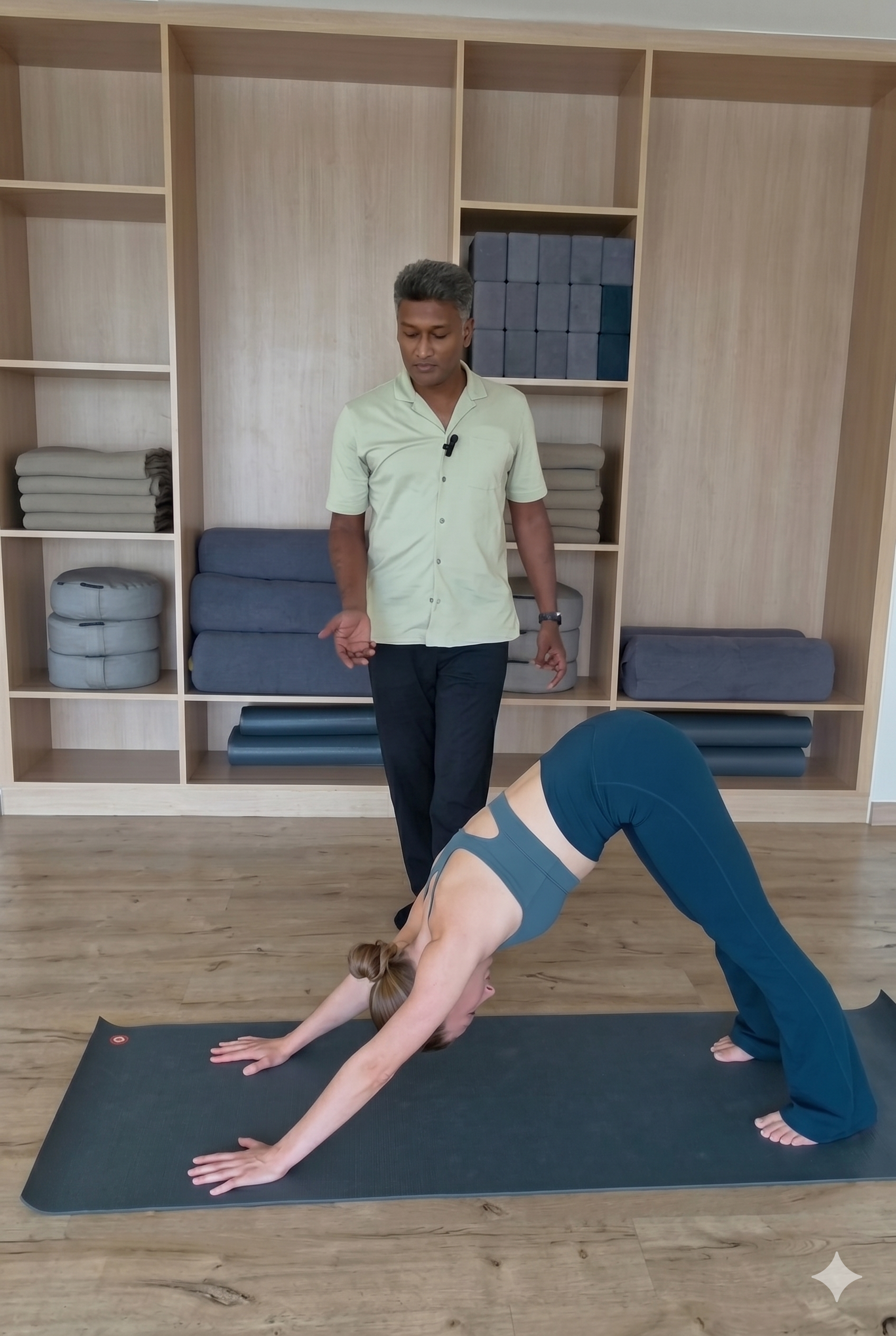
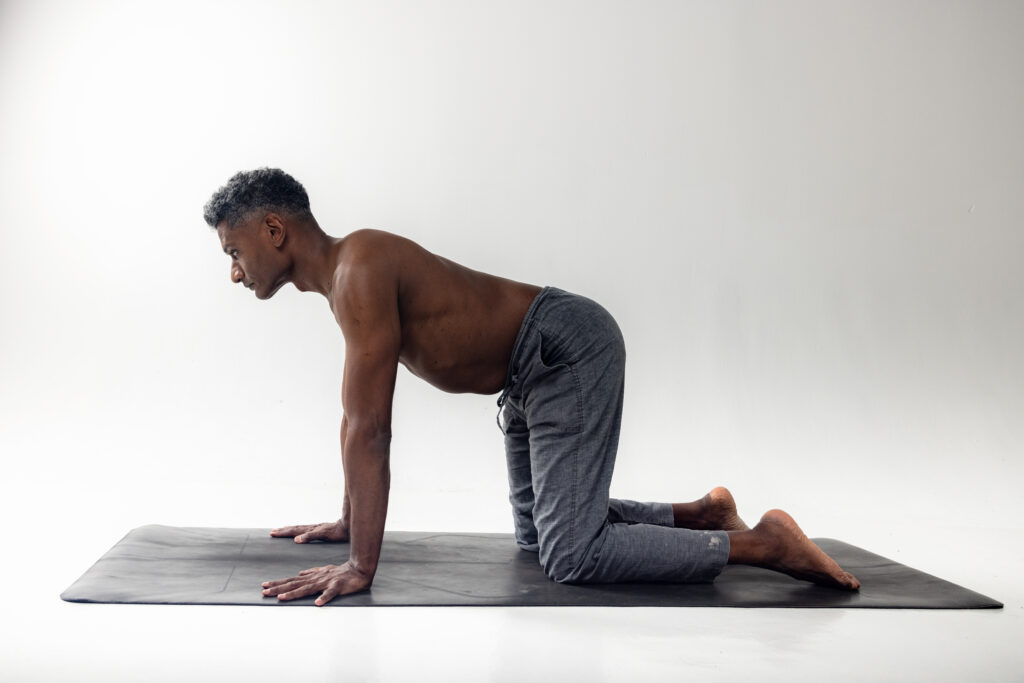
A position is the fundamental orientation of the body in space. In yoga, we work with seven primary positions: standing, kneeling, hands-and-feet (quadruped), seated, supine (lying face-up), prone (lying face-down), and inverted. Every single asana in the entire yoga tradition belongs to one of these categories. Warrior I is a standing position. Cobra is a prone position. Shoulderstand is an inverted position. The position tells us where the body is in space — its orientation relative to gravity.
In a fast-paced vinyasa or power yoga class, the emphasis is placed almost entirely on achieving these positions quickly, matching a visual template, and moving on. The position becomes the goal. But here is the catch that changes everything: ten different people can be in the exact same position, and their bodies will be behaving in ten entirely different ways. The position is only the beginning of the story. The real story is told by the posture.
CONCEPT 01
Position
The fundamental orientation of the body in space relative to gravity. Standing, kneeling, hands-and-feet, seated, supine, prone, inverted. It tells us where the body is — the category of the asana.
Orientation · Gravity · Category
CONCEPT 02
Posture
The behavior of our structure when we stay in a position over time. Subconscious posture is habit — how you naturally stand or sit without thinking. Conscious posture is an asana — a deliberate, aware expression of that same position.
Habitual · Subconscious · Structural
Posture: The Subconscious Behavior of Structure
Now we arrive at the more interesting question. If position is the orientation of the body in space, what is posture?
Posture is the behavior of our structure when we stay in a position for a certain time. And here is the key distinction that most yoga classes completely miss: posture can be either subconscious or conscious — and the difference between the two is the difference between habit and practice.
Think about how you stand while waiting for a coffee. You are in a standing position — but you are not thinking about it. Your weight shifts to one hip, your shoulders round slightly forward, your head drifts ahead of your spine. That is your subconscious posture. It is the accumulated habit of your nervous system, your muscle tone, your years of sitting at a desk or driving or carrying a bag on one shoulder. You are not choosing it. It is simply what your body does when it is left to its own devices in a standing position.
Now step onto a yoga mat and move into Virabhadrasana I — Warrior I. Arms reaching up, parallel to each other overhead. Front knee bending. Back foot pressing firmly into the ground. You are still in a standing position — but now you are inhabiting that position with full awareness and intention. That is a conscious posture. That is an asana.
This is the heart of what we mean by asana in function: an asana is not just a shape. It is a standing position — or a seated position, or a prone position — practiced with conscious, deliberate awareness. The moment that awareness fades and habit takes over, the asana collapses back into subconscious posture. And this is precisely what happens in most yoga classes when the pace is too fast, the cues too external, and the focus too fixated on form.
“Posture is an involuntary maintenance, a constant struggle against gravity, while position is a voluntary action, a conscious placement of the body.”
— Neuroscience & Motor Control Research
When posture is subconscious, it is a habitual behavior — the body doing what it has learned to do over years of repetition. When posture is conscious, it becomes an asana. And when we practice that asana with therapeutic intelligence — using the position as a window into our structural habits — we begin to access and gradually transform the patterns that no amount of external alignment cueing can ever reach.
The Seven Body Positions in Space — and the Postures They Reveal
In yoga, every asana belongs to one of seven fundamental body positions in space. Each position places the body in a specific gravitational relationship, and each one will draw out different subconscious postural habits. This is why the same person can feel completely different in a standing asana versus a supine one — gravity is loading the structure from a different direction, and different habitual patterns emerge.
| Position in Space | Relationship to Gravity | Postural Patterns Revealed | Example Asanas |
|---|---|---|---|
| Standing | Full gravitational load through the spine and lower limbs | Weight imbalance, knee hyperextension, pelvic tilt, thoracic rounding | Tadasana, Virabhadrasana I & II, Trikonasana |
| Kneeling | Load through knees and pelvis; hip flexors under sustained stretch | Anterior pelvic tilt, hip flexor dominance, lumbar compression | Vajrasana, Ustrasana, Anjaneyasana |
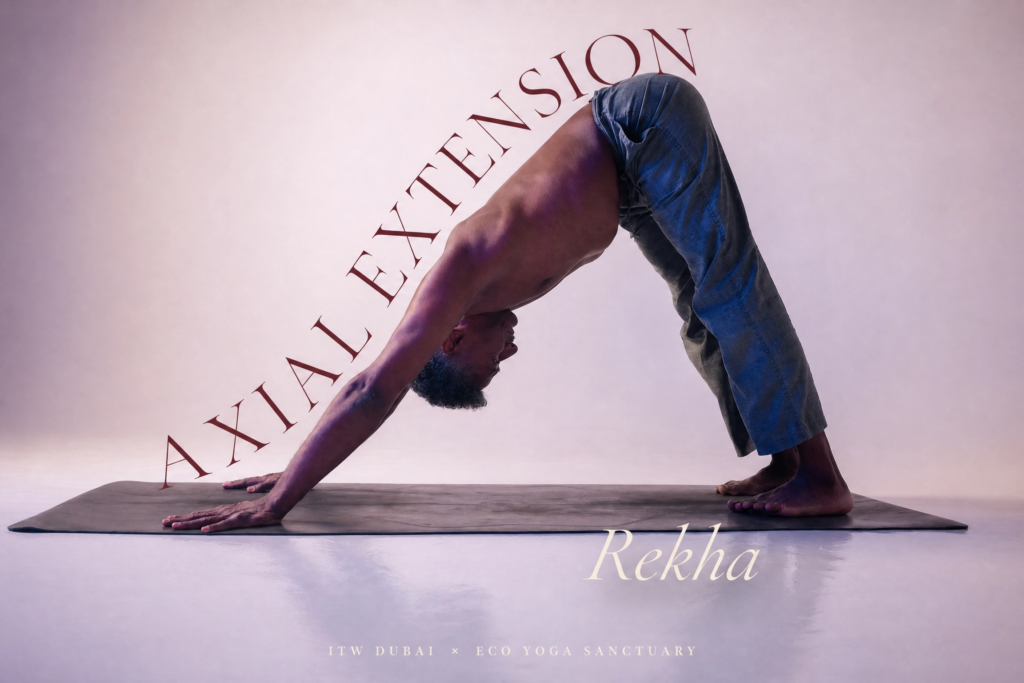
| Hands & Feet | Load shared between upper and lower limbs; spine horizontal | Wrist loading, scapular winging, lumbar sagging or over-arching | Adho Mukha Svanasana, Plank, Vasisthasana |
| Seated | Load transferred to the pelvis and sitting bones | Posterior pelvic tilt, lumbar flattening, hip flexor tightness | Dandasana, Paschimottanasana, Sukhasana |
| Supine (Face-Up) | Load distributed across the posterior body | Lumbar hyperextension, rib flare, neck tension | Savasana, Supta Baddha Konasana, Bridge |
| Prone (Face-Down) | Load distributed across the anterior body | Thoracic stiffness, shoulder internal rotation, hip extension limits | Bhujangasana, Salabhasana, Balasana |
| Inverted | Gravitational load reversed — head below heart | Cervical compression, shoulder instability, breath restriction | Viparita Karani, Sarvangasana, Halasana |
Why Function Trumps Form in Viniyoga Therapy
In the Viniyoga methodology, developed by T.K.V. Desikachar and carried forward by Gary Kraftsow and the American Viniyoga Institute, the core principle is adaptation. We adapt the yoga to the individual, not the individual to the yoga. This is not a modern wellness trend — it is a return to the original purpose of asana as described in the classical texts, where the practice was always prescribed for the specific needs of the specific person.
This is precisely why the distinction between position and posture matters so deeply. If a yoga teacher only corrects your position — telling you to straighten your leg or square your hips — they are addressing only the surface. They are treating the asana as a static pose rather than as a functional tool. They are asking the body to perform a shape without inquiring what the body is actually doing inside that shape.
When we practice asana in function, we use the position to access and transform the posture. We use conscious movement, guided by the breath, to bring awareness to the subconscious habits of the body — and to gently, progressively rewire them.
Who This Practice Is For — and Who It Is Not
Understanding the difference between position and posture is the clearest way to know whether this practice is right for you — and to understand why it is fundamentally different from what most yoga studios in Dubai offer.
1 — For the Practitioner Seeking Healing: If you have tried yoga before but found that the fast-paced, shape-driven classes left you with more pain than relief — this approach is designed for you. Viniyoga Therapy at Eco Yoga Sanctuary works with your body’s actual structure, not against an idealized position. Whether you are managing back pain, stress, or recovery, the functional method adapts every asana to your unique needs.
2 — For the Yoga Teacher Seeking Depth: If you are a certified yoga teacher who wants to move beyond alignment cues and truly understand why the body does what it does in each position — the ITW Mastery Series is your continuing education path. Learn to read postural patterns, apply kinesiology to your sequencing, and earn YACEP-accredited credits that elevate your teaching to a therapeutic level.
3 — For the Dedicated Practitioner Seeking Mastery: If you have years of practice behind you and feel that something essential is still missing — a deeper intelligence in the body, a more honest relationship with your own structure — the Asana In Function series and the Viniyoga methodology offer exactly that. This is yoga as a lifelong inquiry, not a performance.
Watch: Kamal Explains, Tatiana Demonstrates
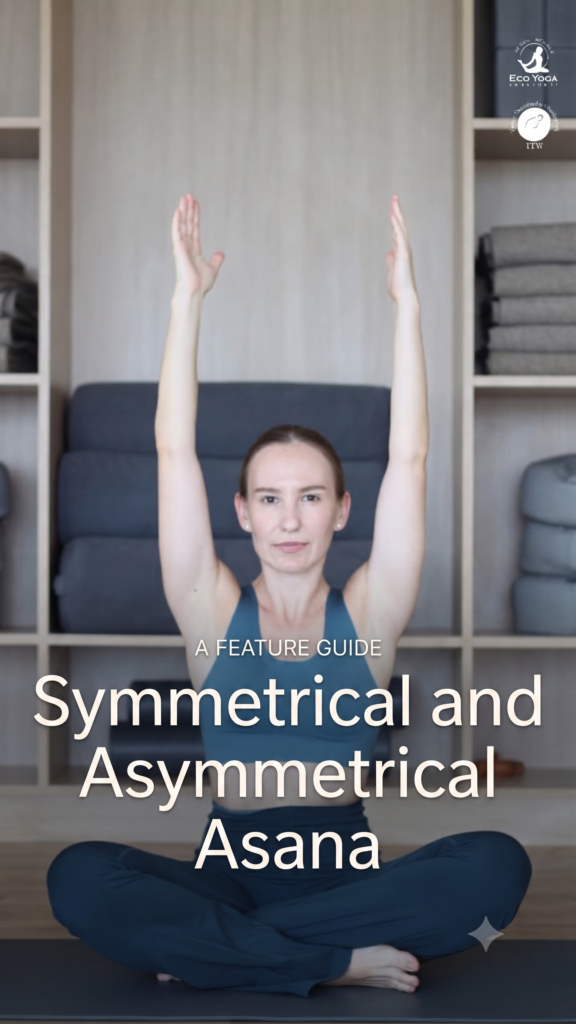
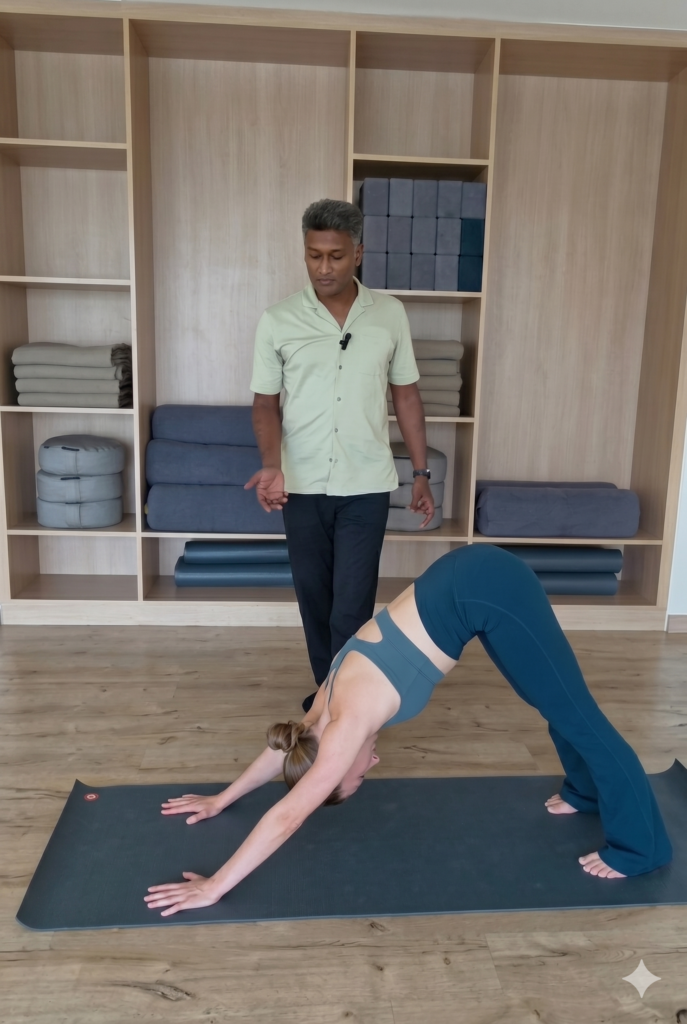
In this short video, Kamal — lead therapist at ITW Dubai — explains the biomechanics of position versus posture, while teacher Tatiana demonstrates how each of the seven body positions in space reveals different structural habits and postural patterns.
Transforming Your Practice, One Position at a Time
Understanding the difference between position and posture is the first step toward a more therapeutic, healing yoga practice. It is an invitation to stop performing for the mirror and start listening to your nervous system. It is the shift from asking, “Am I doing this pose correctly?” to asking, “Is this asana functioning correctly for my body, today?”
This distinction is not just academic. It is the difference between a practice that reinforces your existing structural habits and one that gradually, compassionately transforms them. It is the difference between yoga as exercise and yoga as therapy.
Whether you are seeking relief from chronic pain, managing the effects of stress on your body, or simply looking for a slower, more body-aware practice in Dubai, this functional approach is the foundation of everything we teach at Eco Yoga Sanctuary and ITW Dubai.
In the next article in this series, we will explore stability and balance — what it truly means to be stable in a yoga position, and why chasing balance without building stability first is one of the most common mistakes in yoga practice.
Frequently Asked Questions
What is the difference between position and posture in yoga?
A position is the voluntary arrangement of the body in space relative to gravity (e.g., standing or seated). Posture is the subconscious, habitual behavior of your structure when you stay in that position over time.
What is the Viniyoga approach to asana?
Viniyoga is a therapeutic methodology that adapts the yoga practice to the individual’s unique structure and needs, rather than forcing the individual to fit an idealized “perfect pose.” It was developed by T.K.V. Desikachar and is carried forward by Gary Kraftsow and the American Viniyoga Institute.
Where can I take Viniyoga therapy classes in Dubai?
You can join functional Viniyoga therapy classes with Kamal and Tatiana at Eco Yoga Sanctuary, located in Jumeirah, Dubai. Book directly at ecoyogasanctuary.com/schedule-appointment.
How can yoga teachers learn the functional approach to asana in Dubai?
Yoga teachers can enroll in the ITW Mastery Series in Dubai — a YACEP-accredited continuing education program covering yoga kinesiology, anatomy, and therapeutic sequencing. The July 2026 bundle runs at Eco Yoga Sanctuary, Jumeirah.
EXPERIENCE THE DIFFERENCE
Join Viniyoga Therapy Classes at Eco Yoga Sanctuary, Jumeirah
Practice asana in function — not just in form. Small groups, breath-led sequencing, and therapeutic adaptation to your unique structure.
JULY 2026
ITW Mastery Series
Deepen your anatomical knowledge and earn YACEP continuing education credits. For yoga teachers and advanced practitioners. Eco Yoga Sanctuary, Jumeirah — Jul 11 · 18 · 26 · Aug 1.
Last updated: June 2026 · Written by Kamal, Lead Therapist at Integrated Therapy Work (ITW) Dubai
ASANA IN FUNCTION SERIES
Up Next: Article 2 — Stability & Balance
What does it truly mean to be stable in a yoga position? Explore how stability and balance emerge from posture — and why chasing balance without building stability first is one of the most common mistakes in yoga practice.