

Swing Yoga Journal · Class Walkthrough
What Happens in a Swing Yoga Class in Dubai?
A calm, practical walkthrough for anyone curious about a yoga hammock class.
A Swing Yoga class can look dramatic from the outside. From the inside, a good first class often feels slower, clearer, and more supported than people expect.
The short answer
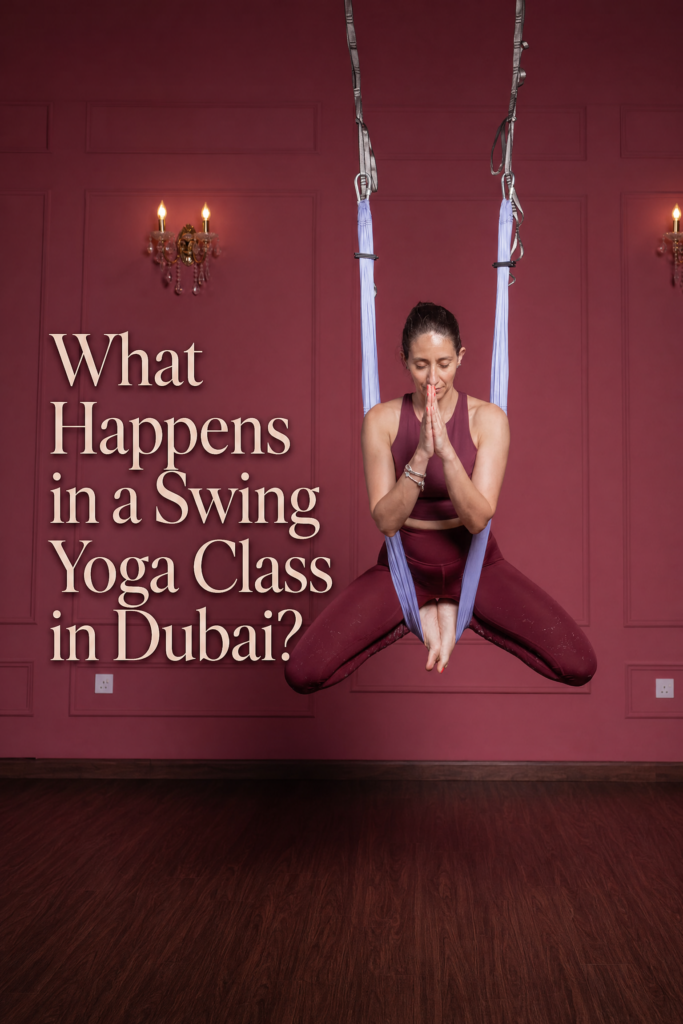
A Swing Yoga class at Crimson Chamber in The Sustainable City, Dubai, is a guided hammock-based movement session. You can expect an introduction to the fabric, a gradual warm-up, supported standing or seated shapes, simple strength and mobility work, options for balance or gentle suspension, and time to rest. The class is designed to be exploratory, not a test of flexibility or fearlessness.
How does a Swing Yoga class begin?
A class begins before anyone leaves the floor. The teacher introduces the hammock, explains how to approach the fabric, and shares practical safety cues. You may begin by holding the swing, leaning back slightly, or sitting into the fabric. These first moments are not minor details; they help you feel where the support is and how your body responds to it.
At Crimson Chamber, the studio setting supports a more intentional pace. The Sustainable City context is a natural reminder that wellness does not have to be an all-or-nothing event. It can be a regular practice of paying attention to how you move, breathe, and recover.
What kinds of movements will you practise?
The exact class changes with the teacher, the group, and the purpose of the session. A beginner-friendly practice may include gentle mobility, standing balances with the hammock as a handhold, supported reaches, seated positions, low-to-the-ground strength work, and a quiet rest. Some participants may explore a more suspended option; others may choose to remain grounded throughout.
The hammock is a prop, a support, and sometimes a challenge. It can help you feel a direction of movement more clearly. It can also reveal habits, such as gripping, holding the breath, or rushing. The teacher’s role is to offer a progression that makes space for noticing those habits rather than judging them.
Will I have to go upside down?
No. Inversions are optional and are never a requirement for belonging in a Swing Yoga class. The first goal is to understand how the fabric works with your body. For some people, a supported recline or a small lean is already a new and meaningful experience. For others, an inversion may become an option later, after a teacher has introduced the setup and relevant safety considerations.
A useful studio culture does not make the most visual pose the measure of success. Good practice can look quiet. It can include feet on the floor, a small range of motion, a clear boundary, or a decision to rest.
How do you know which version is right for you?
Start with the version that lets you breathe and listen. If you feel rushed, unsure, or disconnected, choose less height, more ground contact, or a simpler hold. Ask the teacher for a modification. This is not “doing less”; it is practising discernment.
If you have a health condition, recent injury, pregnancy, or any concern about participating, seek appropriate advice and contact Crimson Chamber before booking. Share relevant information with the teacher before class so you can make a responsible decision together.
Why can a hammock class complement mat yoga?
Mat yoga and Swing Yoga are not competing practices. The floor offers steadiness, gravity, and a direct relationship with the ground. The hammock introduces a different relationship with support, load, and balance. Moving between them can help an experienced practitioner notice familiar postures in a new way.
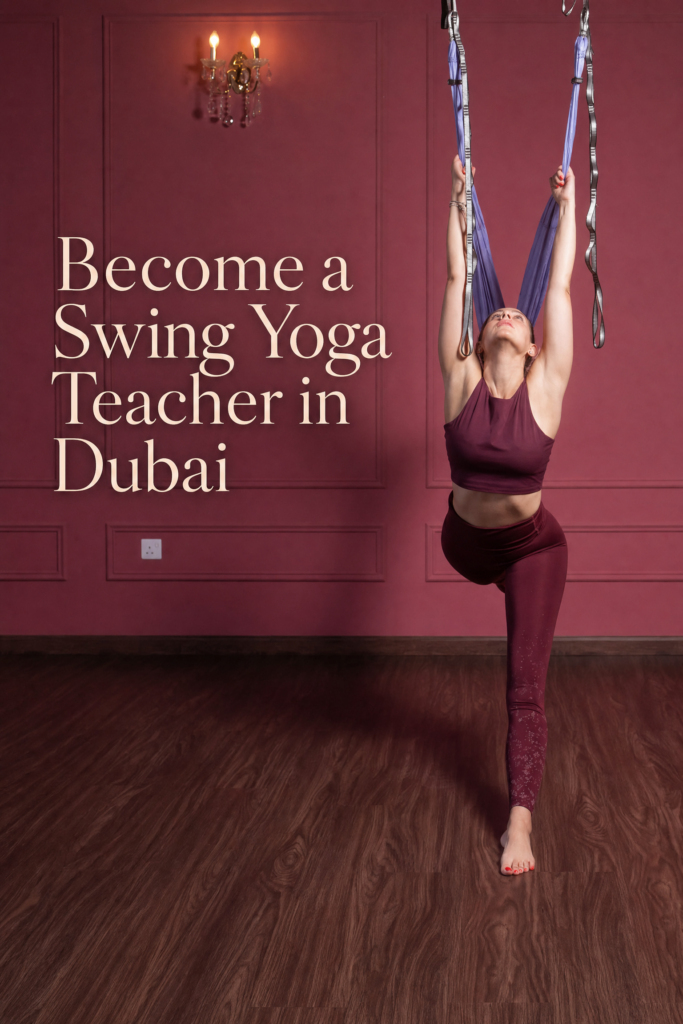
For yoga teachers, that observation can become a professional skill. The October 2026 Swing Yoga Teacher Training with Yara Barqawi is designed for 200-hour yoga teachers, Pilates instructors, and fitness trainers who want to teach hammock-based movement with a structured understanding of safety, anatomy, and methodology.[1]
What to bring to your first class
- Comfortable close-fitting clothes and a water bottle.
- An open mind, without pressure to invert or master a pose.
- Any relevant information you need to share privately with the teacher.
- Enough time to arrive without rushing and settle into the space.
Frequently asked questions
What is a yoga hammock class?
A yoga hammock class uses a suspended fabric hammock to support and challenge yoga-inspired movement. It may also be called aerial yoga or Swing Yoga, depending on the studio and teaching approach.
How early should I arrive for a Swing Yoga class?
Arrive early enough to meet the teacher, hear the setup guidance, and share any relevant questions or considerations before class begins. Contact Crimson Chamber for its current arrival guidance.
Can I join if I am nervous about heights?
Yes, provided the teacher agrees the class is suitable for you. Beginner practice can stay close to the floor, and you can choose grounded options. You do not have to go upside down.
Where can I train to teach Swing Yoga in Dubai?
Integrated Therapy Work offers a 50-hour Swing Yoga Teacher Training with Yara Barqawi at Crimson Chamber, The Sustainable City, Dubai. Check the live registration page for dates, eligibility, price, and availability.[1]