

ASANA IN FUNCTION · YOGA ANATOMY & THERAPEUTIC PRACTICE
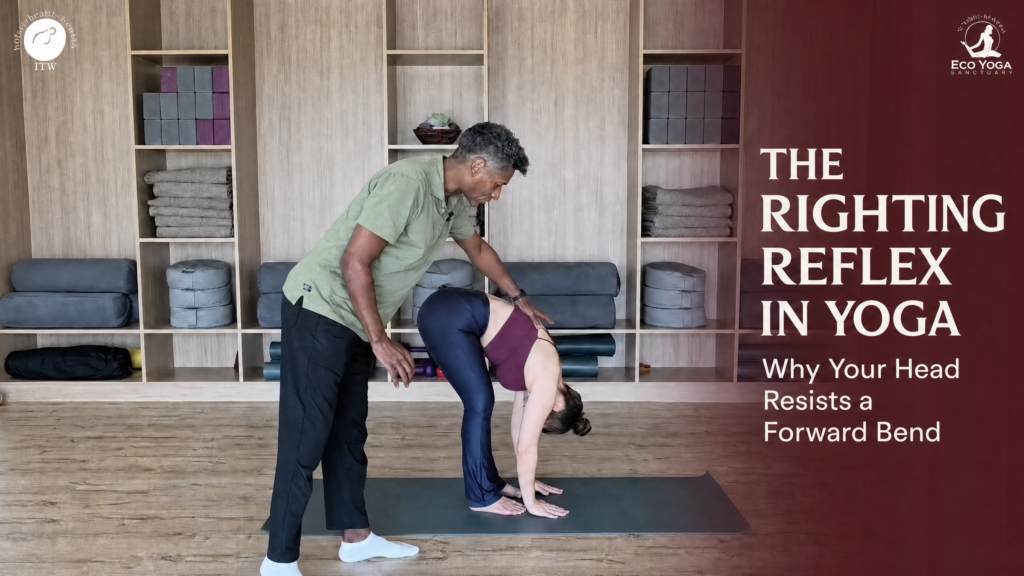
The Righting Reflex in Yoga: Why Your Head Resists a Forward Bend
A breath-led, anatomy-informed exploration for yoga teachers and practitioners in Dubai, UAE.
Written by Kamal, Lead Therapist, Integrated Therapy Work · Eco Yoga Sanctuary, Jumeirah · 6 min read
“A forward bend is not a test of how far you can reach. It is an opportunity to notice how you organise yourself while you move.”
— Kamal, Lead Therapist, Integrated Therapy Work, Dubai
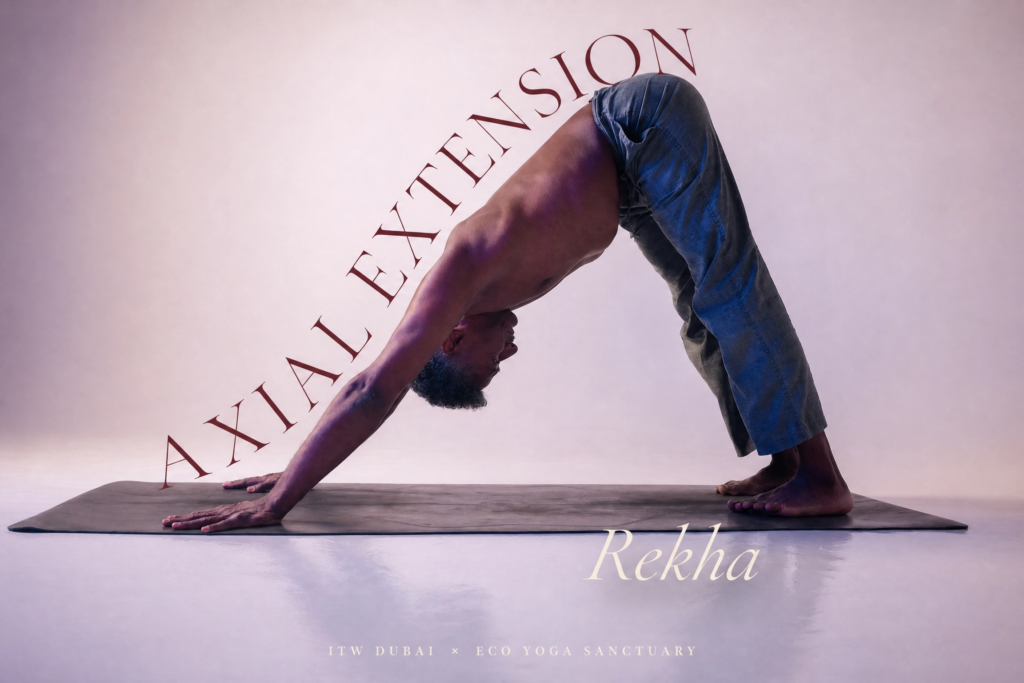
The righting reflex in yoga is the automatic urge to keep your head oriented as you fold forward. It can leave the neck working and the chin reaching. At Integrated Therapy Work in Dubai, UAE, we use breath, support and attention to explore a lighter head—without forcing the neck or chasing a deeper shape.
What is the righting reflex in yoga?
The righting reflex is an automatic orienting response. In yoga, you may notice it when the head remains active or reaches outward during a fold. It is not a problem to defeat. It is information to observe before choosing a smaller, supported or more breath-led movement.
Integrated Therapy Work has previously used this idea to explain why the chin may project and the neck may keep working in a fold.[1] The useful question is not, “How can I switch this off?” It is, “What changes when I slow down enough to notice it?”
Why can a forward bend create neck tension?
Neck tension can appear when the head keeps orienting outward rather than being supported by the spine and hips. Pace, breath-holding, effort and range all influence the experience.
| What you may notice | A possible pattern | A breath-led exploration |
|---|---|---|
| Chin reaching forward | The head stays active as the body folds. | Slow the exhale and soften the gaze. |
| Neck and shoulders working | The upper body is holding rather than yielding. | Support the hands, bend the knees or reduce the range. |
| Upper back rounding hard | The fold is being taken from one area only. | Make the movement smaller and invite hips and spine to participate. |
| Breath becoming held | Effort is overriding ease. | Return to a natural breath before moving further. |
How do you explore the righting reflex without forcing it?
Start with less range, use an easy exhale and give the head a supported option. You do not need to push the chin to the chest or hang heavily. The aim is to notice whether the neck can soften while you remain comfortable and breathe naturally.
- Choose a supported standing or seated forward-bend variation. A chair, bent knees or your hands on blocks can make the movement more available.
- As you exhale, notice the weight of the head. If it is comfortable, allow a soft, easy nod rather than an aggressive tuck.
- Come out slowly. Compare the sensation in your neck, back and breath, then return to a neutral position.
This is an educational exploration, not medical advice. Stop for pain, dizziness, numbness or major balance changes. For injury, medical conditions or persistent symptoms, seek qualified healthcare advice.
What can yoga teachers in Dubai learn from this pattern?
Yoga teachers in Dubai can use the righting reflex as a cueing lesson: observe effort, offer options and explain the choice. A useful cue gives a student room to sense rather than demanding a shape.
“Let the exhale reduce effort in your neck. If your head wants to stay lifted, support yourself and make the fold smaller. The goal is not a deeper position; the goal is a more useful experience.”
This is the difference between seeing a position—an orientation in space—and understanding posture—a habitual or conscious way of organising yourself. For teachers, that distinction changes “relax your neck” into a clear invitation that a student can test for themselves.
How does Viniyoga inform this breath-led approach?
Viniyoga begins with adaptation to the individual. In a forward bend, choose the range, support, breath and pace that let you participate without forcing a standard shape. This draws on the Viniyoga lineage of T.K.V. Desikachar and Gary Kraftsow’s American Viniyoga Institute.[2]
For a practitioner seeking therapeutic yoga in Dubai, this may mean doing less and choosing a version that meets your capacity. For a teacher, it means giving options before asking for range.
A note from my kinesiology studies with Dr. Joe
I first explored this idea while studying kinesiology through Learn Muscles with my mentor, Dr. Joe Muscolino.[3] It sharpened my attention to the difference between seeing a position and understanding how a person organises themselves within it.
This article reflects my teaching perspective and my continued study of functional anatomy. It does not suggest endorsement of this article by Learn Muscles or Dr. Joe Muscolino.
Who may benefit from this way of practising?
The healing practitioner
Use less range and more support rather than pushing.
The yoga teacher
Build precise language for head, neck, breath and effort.
The mastery seeker
Use a functional lens to make asana more adaptive.
Frequently asked questions about the righting reflex in yoga
What is the righting reflex in yoga?
In yoga, the righting reflex describes the automatic urge to keep the head oriented as you move. During a forward bend, you may experience this as the head staying active, the chin reaching or the neck resisting a softer release.
Why does my head lift when I fold forward?
Your head may lift because orienting, effort, breath-holding or the range of the fold is asking more than your body wants to offer at that moment. Try less range, more support and an unforced exhale rather than trying to push the head down.
How can I relax my neck in a forward fold?
Make the fold smaller, bend your knees or support your hands so the neck does not need to work as hard. Then use a natural exhale and allow only the amount of head release that feels comfortable and steady.
Where can yoga teachers study functional yoga anatomy in Dubai?
Integrated Therapy Work offers anatomy-informed education for yoga teachers and committed practitioners in Dubai, UAE. The ITW Mastery Series at Eco Yoga Sanctuary in Jumeirah explores functional movement, therapeutic adaptation and specific ways to observe and cue asana.
Experience the difference
Join our Viniyoga Therapy classes at Eco Yoga Sanctuary
Practise asana in function—not only in form. Small groups, breath-led sequencing and therapeutic adaptation in Jumeirah, Dubai.
ITW Mastery Series
Study function, not just form
Deepen your anatomical and therapeutic understanding with the July and August ITW Mastery Series workshop bundles at Eco Yoga Sanctuary, Jumeirah.
References
- Integrated Therapy Work. “Unlock Deeper Forward Bends: A Key Lesson from Yoga Teacher Training.”
- American Viniyoga Institute. “Yoga Therapy.”
- Learn Muscles. “Kinesiology Lectures.”
Last updated: 16 August 2026 · Written by Kamal, Lead Therapist at Integrated Therapy Work (ITW) Dubai
ASANA IN FUNCTION SERIES
Up next: Forward-Bend Cues for Yoga Teachers: Beyond “Relax Your Neck”
Explore how a small change in language can help a student move from performing a shape to sensing a useful, individual experience.