How Understanding the Six Groups of Back Bends Transformed My Teaching and Can Transform Your Yoga Teacher Certificate Journey
The Moment Everything Changed
Sarah sat on her yoga mat, staring at the ceiling of the training studio. Around her, fellow yoga teacher training students effortlessly arched into Wheel Pose, their spines forming perfect crescents of strength and grace. She had been practicing yoga for three years, had invested in a comprehensive yoga teacher certificate program, and yet here she was, unable to lift her hips more than a few inches off the ground without her lower back screaming in protest.
“I just don’t have a flexible spine,” she told herself, the same story she had repeated for months. But then her teacher, Kamal, knelt beside her mat and asked a question that would change everything: “Sarah, do you know which group of back bends you’re attempting, and have you prepared your body for it?”
That single question opened a door to a world of understanding that Sarah—and thousands of yoga practitioners like her—had never encountered. Back bending, she would soon discover, was not about forcing the spine into submission. It was about understanding the intricate architecture of the body, honoring its wisdom, and progressing through a systematic framework that has been refined over generations of yoga training.
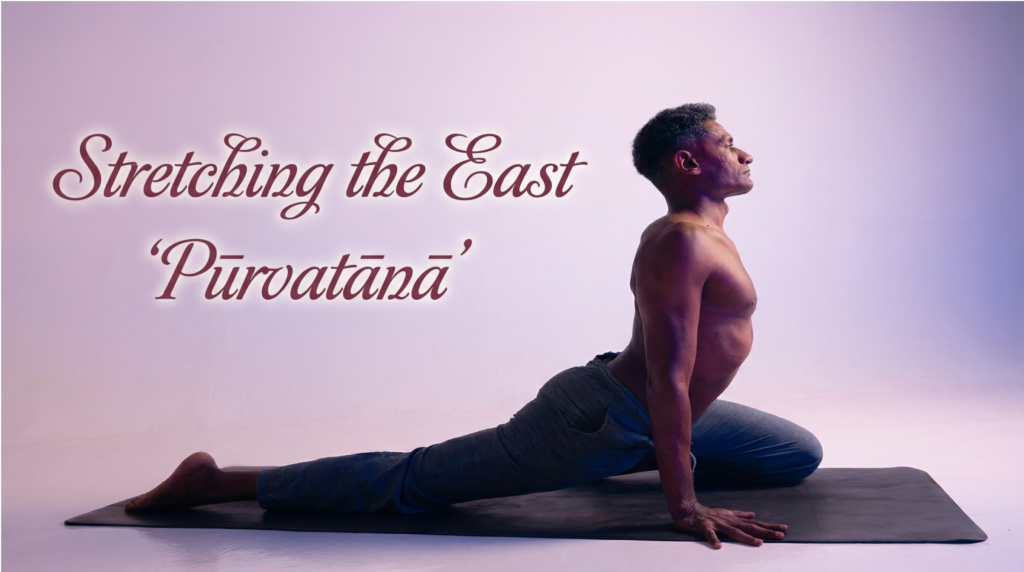
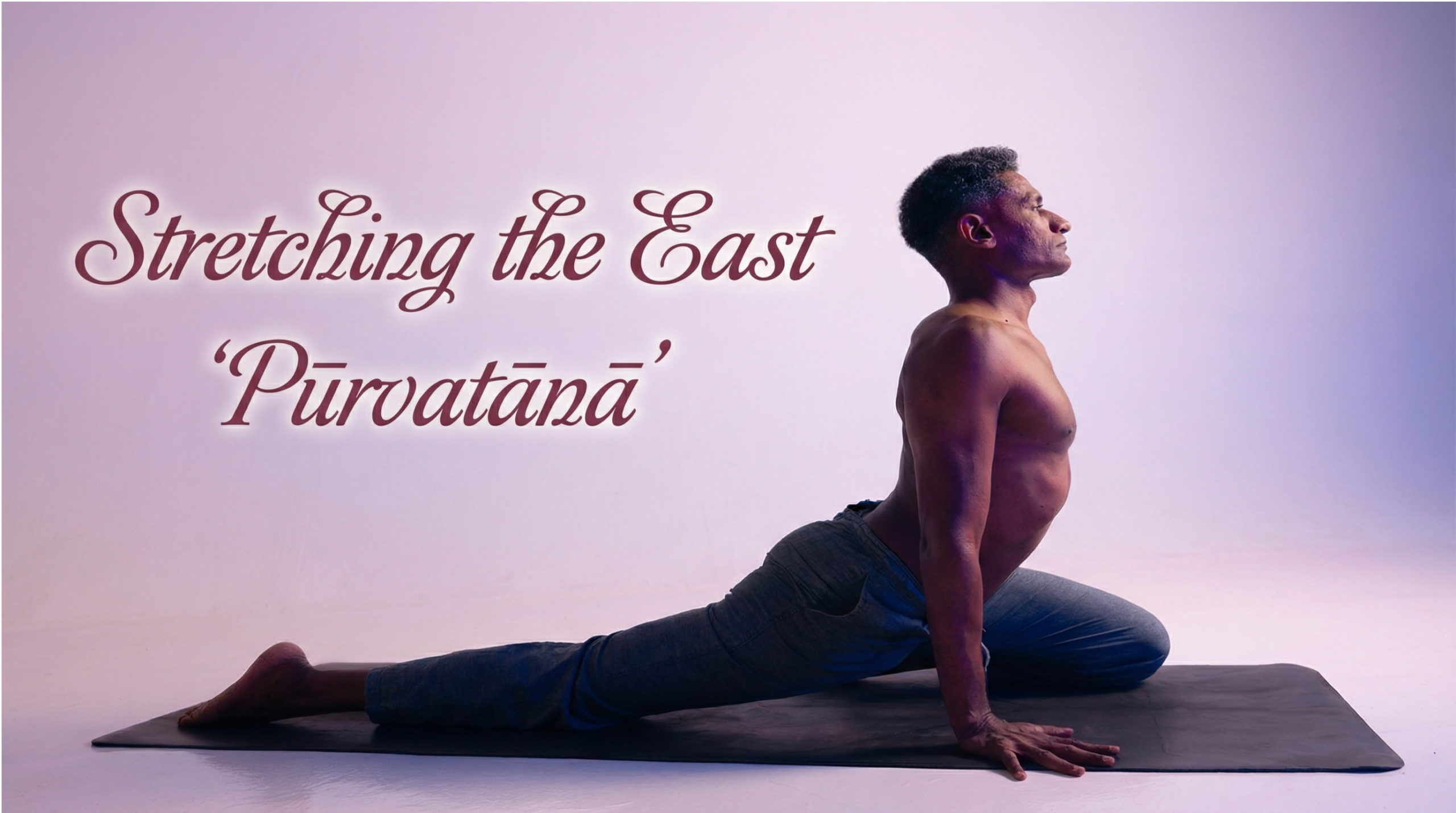
The Ancient Wisdom of Pūrvatānā: Stretching the East
In the traditional yogic understanding of the body, the front of our torso is called the “East” (Pūrva), the direction of the rising sun, symbolizing new beginnings, vitality, and the awakening of energy. When we practice back bends—or Pūrvatānā as they are known in Sanskrit—we are literally “stretching the East,” opening the anterior body to receive light, breath, and life force.
This poetic understanding carries profound practical implications for anyone pursuing a yoga teacher certificate. Modern life has created what experts call a “posture crisis.” We spend hours hunched over computers, phones, and steering wheels, collapsing our Eastern front and creating what has become known as “text neck.” Our hip flexors shorten from constant sitting, our chest muscles tighten, and our spine loses its natural curves. Back bending practice, when approached intelligently, offers an antidote to these modern ailments.
But here is where most yoga training programs fall short: they teach back bends as isolated poses rather than as a comprehensive system. Sarah’s teacher, Kamal, had studied the Viniyoga lineage of Krishnamacharya, which organizes back bends into six distinct groups based on their structural characteristics, frame type, and therapeutic intentions. Understanding these groups, he explained, was the difference between struggling with back bends and mastering them.
The Six Groups: A Systematic Approach to Back Bending
Group 1: Building the Foundation with Open-Frame Prone Back Bends
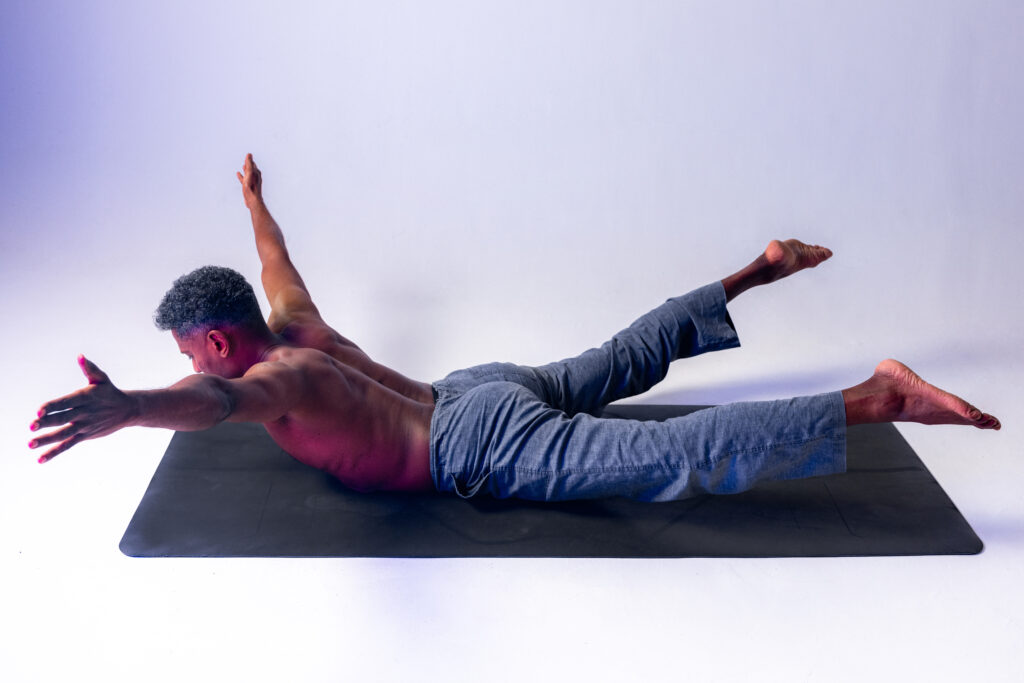
Sarah’s journey began where all intelligent yoga teacher training should begin: with Group 1 back bends. These are the foundational postures performed in a prone position with minimal arm support—poses like Bhujangāsana (Cobra Pose), Śalabhāsana (Locust Pose), and Ardha Śalabhāsana (Half Locust).
“These poses are not about flexibility,” Kamal explained during their yoga training session. “They are about strength. You are building the posterior muscles of your spine—the erector spinae, the multifidus, the quadratus lumborum. These muscles are the foundation that will support all your future back bending.”
Sarah spent two weeks working exclusively with Group 1 postures. She learned to engage her back muscles without gripping, to breathe fully while lifting her chest, and to feel the difference between lumbar compression and distributed spinal extension. For the first time in her yoga teacher certificate program, back bending felt sustainable rather than scary.
Group 2: Integrating Strength with Fixed-Frame Postures
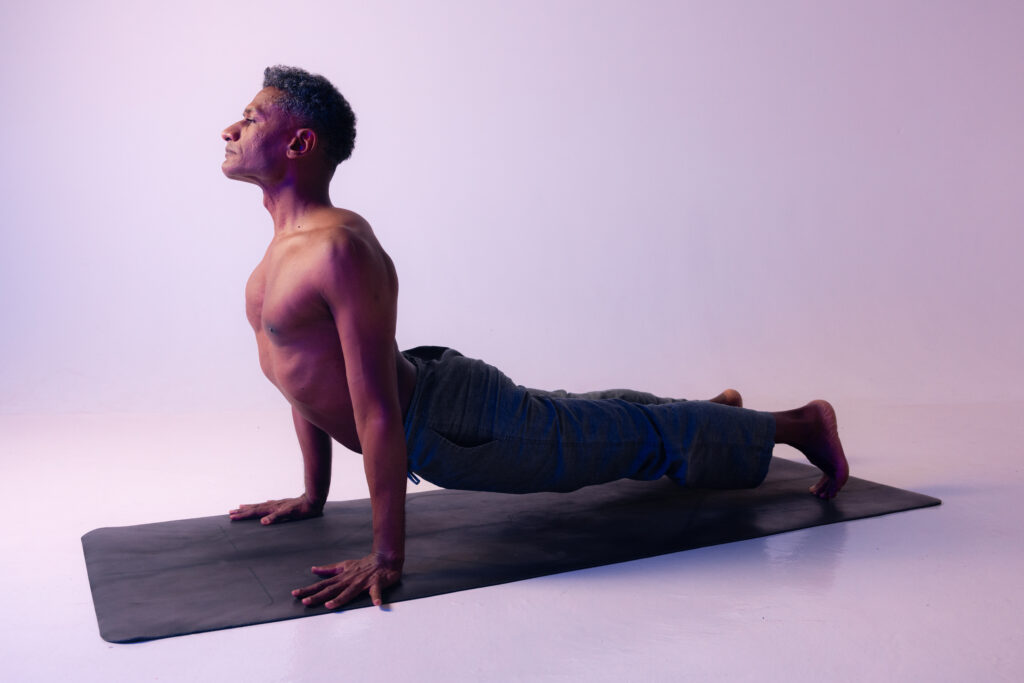
Once Sarah had built foundational strength, Kamal introduced Group 2: fixed-frame back bends with arm leverage. These included Cakravākāsana (Cat-Cow variations), Ūrdhva Mukha Śvānāsana (Upward Facing Dog), and Rājakapotāsana (King Pigeon Pose).
The key distinction, Sarah learned, was the fixed frame. In these postures, the hands and feet (or knees) remain in stable positions while the torso moves between them. This structure requires coordination between upper body strength and spinal flexibility—a bridge between the foundational work of Group 1 and the more demanding back bends to come.
“This is where most yoga training programs jump too quickly,” Kamal noted. “Students move from Cobra directly to Wheel without building the integrated strength that Group 2 provides. Then they wonder why their wrists hurt or their shoulders feel unstable.”
Group 3: Unlocking the Hip Flexors Through Asymmetrical Postures
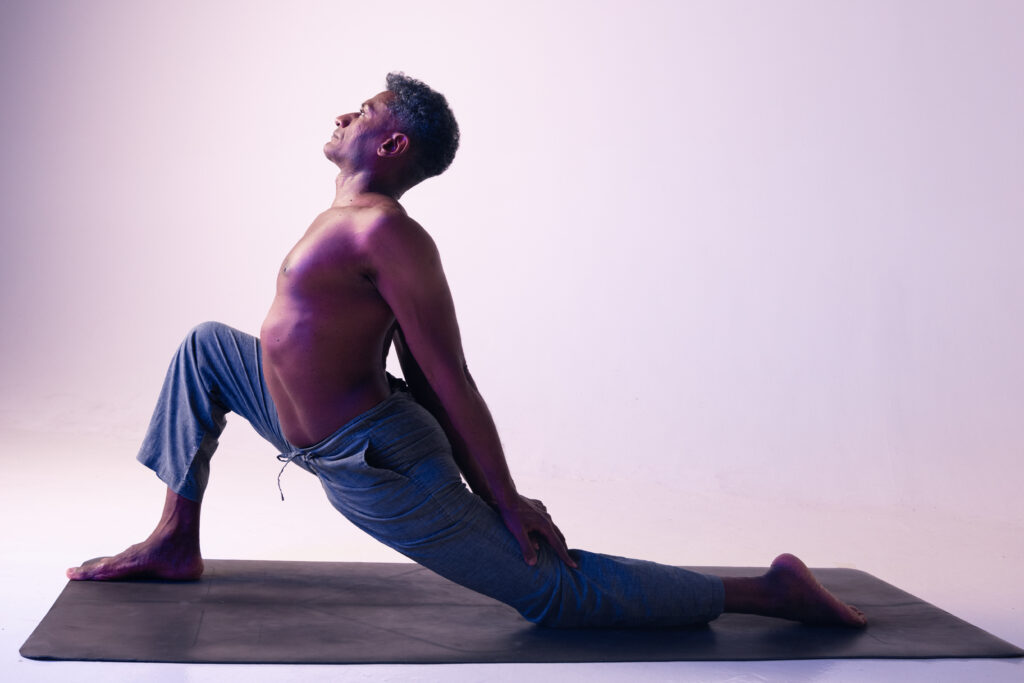
The breakthrough moment in Sarah’s yoga teacher certificate journey came when she understood Group 3: asymmetrical back bends that target the iliopsoas muscle complex. These standing and kneeling postures—like Vīrabhadrāsana (Warrior variations) and Ekapāda Uṣṭrāsana (One-Legged Camel)—create deep stretching of the hip flexors on the extended leg side.
“Your hip flexors are the gatekeepers to back bending,” Kamal explained. “When they are tight from sitting, they pull on your lumbar spine, creating compression and limiting your ability to extend. Group 3 postures address this directly.”
Sarah had always thought of Warrior I as a leg-strengthening pose. Now she understood it as a crucial preparation for deeper back bends, a way to release the chronic tension in her hip flexors that had been sabotaging her practice. This realization alone was worth the investment in her yoga training.
Group 4: The Deep Back Bends That Require Full Integration
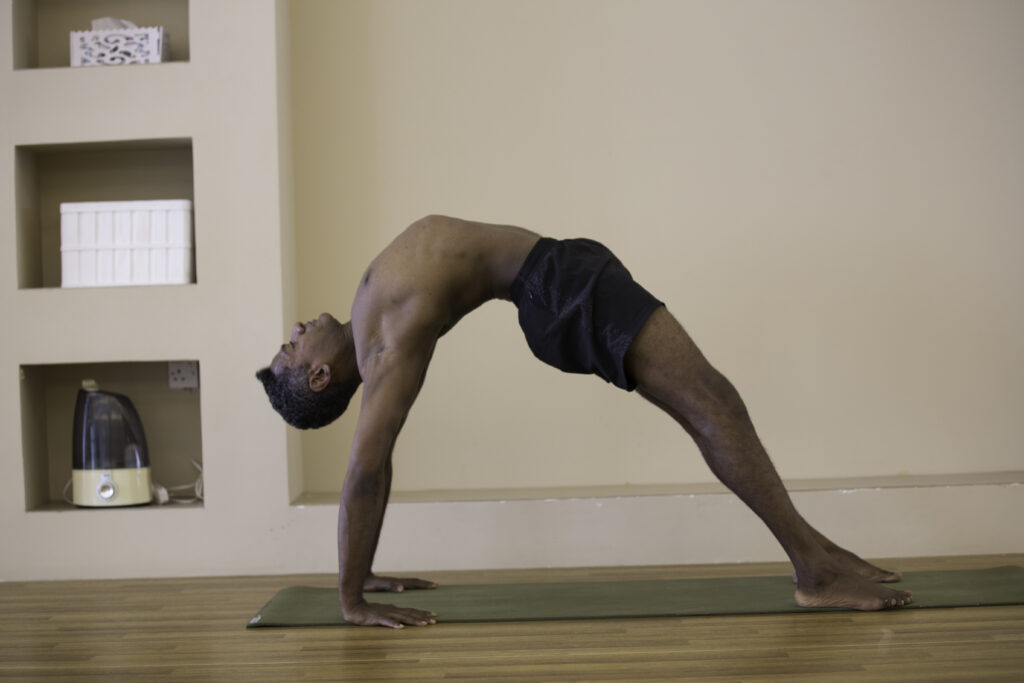
With three months of systematic preparation, Sarah finally returned to the pose that had once defeated her: Ūrdhva Dhanurāsana (Wheel Pose). But now she understood it as part of Group 4—fixed-frame leveraged positions that require substantial strength, significant flexibility, and refined awareness.
Group 4 also includes Dhanurāsana (Bow Pose) and Dvipāda Pīṭham (Bridge Pose). These postures utilize both arms and legs to create leverage for deep spinal extension. The closed frame prevents compensatory patterns and ensures distributed extension across all spinal segments.
“When you attempt Group 4 without preparation,” Kamal said during their yoga teacher training session, “your body finds releasing valves—places where it compensates to avoid the work. You might hyperextend your lumbar spine, flare your ribs, or collapse your knees. But when you have built the foundation through Groups 1, 2, and 3, your body knows how to distribute the extension evenly.”
Sarah lifted into Wheel Pose. Her arms were strong from Group 2 work. Her hip flexors were open from Group 3 practice. Her back muscles were engaged from months of Group 1 training. For the first time, the pose felt integrated rather than forced. She held it for five breaths, came down with control, and felt tears of accomplishment on her cheeks.
Groups 5 and 6: Specialized Postures for Advanced Practitioners
As Sarah progressed through her yoga teacher certificate program, Kamal introduced the final two groups: Group 5 postures with head support like Matsyāsana (Fish Pose), which create intense chest and throat opening, and Group 6 fixed-frame prone postures like Paryaṅkāsana (Couch Pose), which emphasize deep quadriceps stretching.
These specialized categories require particular caution and strong core engagement to protect vulnerable areas. Sarah learned that not every student needs to practice every group, and that intelligent yoga training means matching postures to individual capacity and therapeutic intention.
The Releasing Valves: Understanding Compensation Patterns
One of the most valuable concepts Sarah learned in her yoga teacher training was the idea of “releasing valves”—the places where the body compensates when it lacks the strength or flexibility to perform a back bend with integrity.
Kamal identified four primary releasing valves:
The Lumbar Valve: When the thoracic spine lacks mobility, practitioners often hyperextend the lumbar spine, creating compression and potential injury. Sarah learned to engage her core and distribute extension throughout her entire spine rather than hinging at her lower back.
The Cervical Valve: Dropping the head back without control can compress the cervical spine. Sarah practiced maintaining length in her neck and supporting her head with awareness.
The Rib Flare Valve: When the abdominal muscles are weak, the ribs thrust forward, creating an unstable foundation. Sarah learned to maintain gentle engagement of her abdominal wall even in deep back bends.
The Knee Valve: In postures like Wheel, allowing the knees to splay outward indicates weak hip stabilizers and tight hip flexors. Sarah practiced keeping her knees aligned over her ankles, building the strength and flexibility required for proper alignment.
Understanding these releasing valves transformed Sarah’s teaching. When she began instructing her own students after earning her yoga teacher certificate, she could immediately identify compensation patterns and guide students toward safer, more effective practice.
The Therapeutic Intentions: Why We Practice Back Bends
Beyond the physical benefits, Sarah’s yoga training helped her understand the deeper therapeutic intentions of back bending practice. According to the Viniyoga tradition, back bends serve multiple purposes:
Biomechanically, they counteract the forward-focused patterns of modern life, restoring natural spinal curves and opening the anterior body. They strengthen the posterior chain, improve breathing capacity by expanding the chest, and stimulate the sympathetic nervous system, creating energy and alertness.
Energetically, back bends are said to activate the heart chakra (Anahata) and, in head-supported postures, the throat chakra (Vishuddha). They cultivate qualities of courage, openness, and vulnerability—the willingness to expose the soft front of the body and trust in one’s own strength.
Psychologically, back bending practice can help release stored emotions and trauma held in the anterior body. Many students experience emotional release during deep back bends, a phenomenon that Sarah learned to hold space for in her teaching.
Intelligent Sequencing: The Key to Safe Progression
Perhaps the most practical takeaway from Sarah’s yoga teacher certificate program was learning how to sequence back bends intelligently. Kamal taught her a simple progression:
Start with Group 1 to build foundational posterior strength. Progress to Group 2 to develop integrated upper body capacity. Address hip flexor tightness through Group 3 before attempting deeper back bends. Reserve Groups 4, 5, and 6 for well-prepared practitioners who have established strong foundations in earlier categories.
Always balance back bends with appropriate counter-poses—gentle forward folds, twists, and supine knee-to-chest poses that neutralize the spine and prevent residual compression.
This systematic approach, Sarah discovered, was the difference between yoga training that creates confident, knowledgeable teachers and programs that simply certify students who can perform poses without understanding their underlying principles.
The Transformation: From Student to Teacher
Six months after that humbling moment on her mat, Sarah stood before her first class as a certified yoga teacher. She guided her students through a carefully sequenced back bending practice, starting with Cobra and Locust, progressing through Cat-Cow and Low Lunge, and culminating in Bridge Pose for those who were ready.
She watched one student struggle with the same limitations she had once faced. Sarah knelt beside her mat and asked, “Do you know which group of back bends you’re attempting, and have you prepared your body for it?”
The student looked up with recognition in her eyes—the same recognition Sarah had felt six months earlier. In that moment, Sarah understood that earning her yoga teacher certificate was not the end of her journey. It was the beginning of a lifelong practice of learning, teaching, and helping others discover the transformative power of intelligent, systematic yoga training.
Your Journey Awaits: Choosing the Right Yoga Teacher Training
If Sarah’s story resonates with you, you may be ready to deepen your own practice through comprehensive yoga teacher training. The right program will offer more than just pose instruction—it will provide a systematic framework for understanding the body, recognizing individual variations, and adapting practices to meet diverse needs.
Look for yoga teacher certificate programs that emphasize:
•Anatomical education that goes beyond memorizing muscle names to understanding functional movement patterns
•Progressive sequencing that builds skills systematically rather than rushing toward advanced poses
•Therapeutic applications that prepare you to work with students of varying abilities and limitations
•Lineage-based wisdom from traditions like Viniyoga, Iyengar, or Ashtanga that have refined their approaches over decades
•Mentorship from experienced teachers who can guide your personal practice while developing your teaching skills
The journey from struggling student to confident teacher is not always linear, but with the right yoga training, it is always possible. Your spine, like Sarah’s, contains wisdom waiting to be unlocked. The question is not whether you are flexible enough or strong enough. The question is whether you are ready to approach your practice with intelligence, patience, and systematic progression.
The East is waiting to be stretched. The light is waiting to pour in. Your yoga teacher certificate journey begins with a single breath, a single lift of the chest, a single commitment to understanding your body’s unique architecture and honoring its capacity.
Are you ready to begin?
About the Author: This article draws from the comprehensive back bending curriculum developed by Kamal SAAD at Integrated Therapy Work, combining traditional Viniyoga wisdom with modern anatomical understanding. For more information about yoga teacher training programs that emphasize intelligent, systematic progression, visit Integrated Therapy Work.