
Dwi Pada Pitham in Viniyoga: What Teachers Learn From Bridge Pose
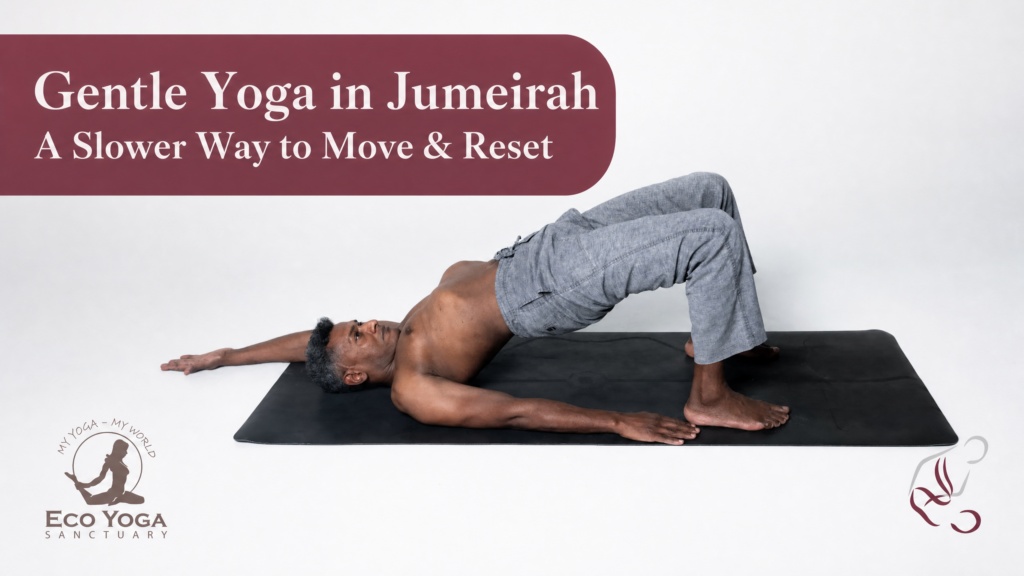
In the Viniyoga approach, Dwi Pada Pitham (Bridge Pose) is a useful teaching lens for observing how breath, pace, and cueing affect an individual’s experience of a familiar position. Teachers adapt the movement rather than assume that one shape, sensation, or cue will suit every student.
Lineage and Scope
Viniyoga is an approach that adapts breath, movement, and sequencing to the individual. The approach is rooted in the teaching of T.K.V. Desikachar and informs the work of Gary Kraftsow and the American Viniyoga Institute. At Integrated Therapy Work (ITW), these principles help teachers consider function, stated intention, and observable response rather than form alone.
Position vs. Posture
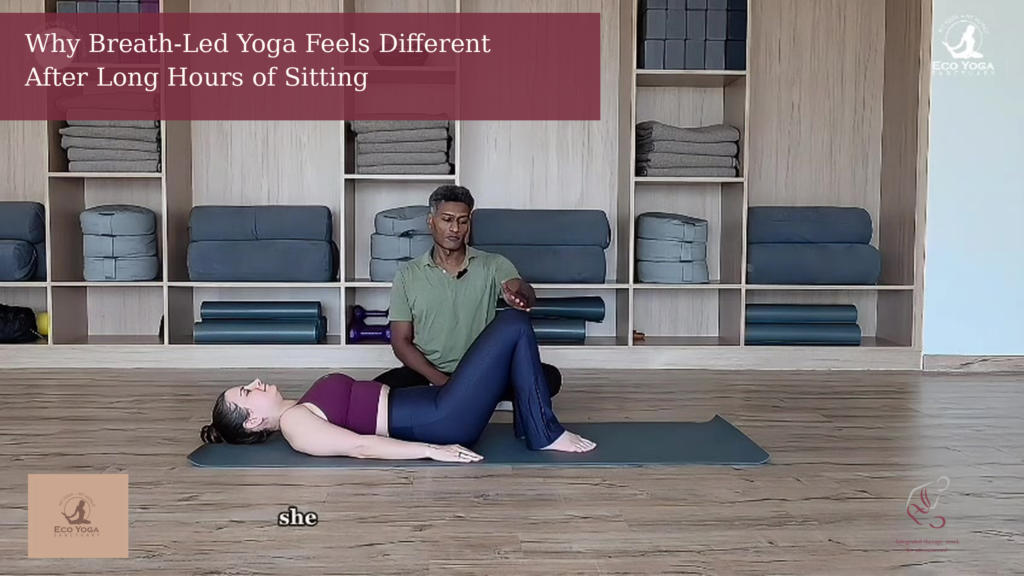
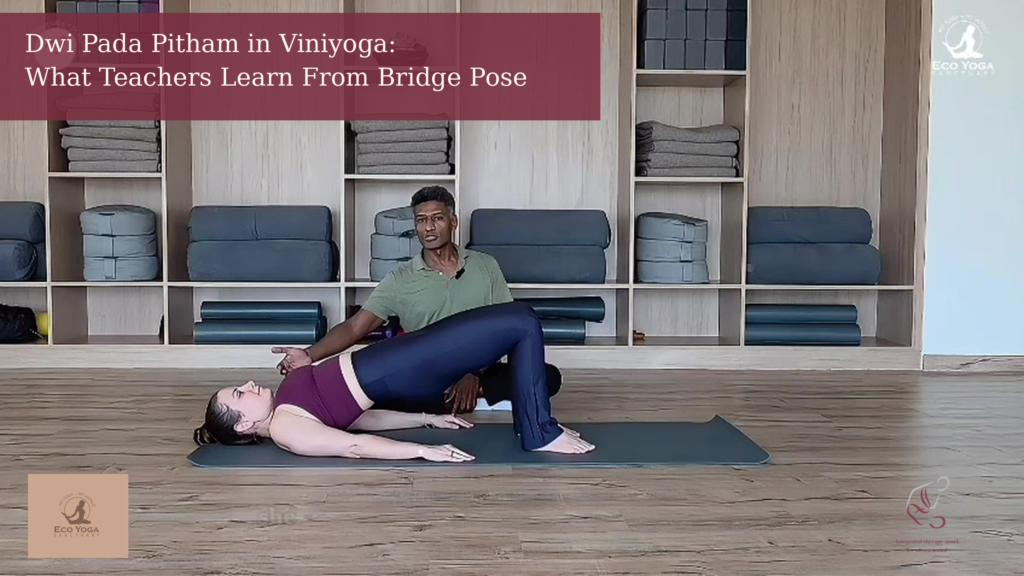
For teachers, a position is simply an orientation in space—here, lying supine with the pelvis lifted. A posture is an individual habit or conscious asana that emerges within that position. Two students may look similar while reporting very different sensations or breath patterns. That difference is an invitation to ask, observe, and offer options rather than to make an anatomical assumption.
The Power of the Heel-Led Cue
A heel-led cue can shift a student’s observation. Pressing the heels into the floor may invite a sense of effort through the hips and buttocks during the lift. The video-led version of this pose contrasts that invitation with a front-of-thigh-dominant strategy that may allow the neck to slide back. Teachers can use a gentle chin tuck, a lower lift, or a pause as options, while asking the student what changes.
Breath Direction and Observation
Breath can organise movement in Viniyoga. In the version shown here, an inhalation accompanies the lift and an exhalation accompanies a gradual descent through the spine. This gives the teacher a simple observation point: does the breath remain comfortable, and does the student have enough time to choose the transition? If not, reduce the range, simplify the cue, or change the pace.
The Glute Assumption
A common pitfall is assuming a cue like “squeeze your glutes” works for everyone. Biomechanical variations mean one student feels gluteal contraction while another feels hamstring tension. At Integrated Therapy Work (ITW), adaptation is a core teaching skill. If a cue causes discomfort, the teacher must adapt the foot placement or lift height. For students with persistent, severe, or radiating pain, a qualified clinician should assess them before attempting adaptations.
Adaptation as a Teaching Skill
Adaptation is a teaching skill. It can include adjusting heel distance, range, pace, or whether a student uses a prop as a tactile reference. This sequencing depth is central to exploration in the Mastery Series at ITW. While the client-facing article at [Placeholder: Eco Yoga Sanctuary Bridge Pose Article] introduces the movement, teacher education asks what an adjustment is intended to explore and how the student responds.
Safety and Professional Scope
Teachers should maintain professional boundaries. A qualified clinician should assess persistent, severe, radiating, neurological, post-operative, or pregnancy-related concerns before a new practice. The role of a yoga teacher is to offer education, observation, and appropriate options—not to diagnose or prescribe treatment.
FAQ: Sequencing Dwi Pada Pitham in Dubai
How do I adapt Bridge Pose for students who sit all day in Jumeirah offices?
Avoid assuming that office work creates the same pattern in every student. For a student who has been sitting, begin with a comfortable setup, use a modest heel-led lift if appropriate, and make the exhale descent slow enough to observe. Ask what the student notices rather than promising to counter a particular “desk posture.”
Should I use props for Dwi Pada Pitham in a group class in Dubai?
Props can be useful when there is a clear teaching reason. For example, a block between the knees may offer a tactile reference that helps a student notice leg position. It is not required for everyone, and it should be removed or changed if it obscures comfortable breathing or useful feedback.
How does the Viniyoga approach differ from Hatha Bridge Pose?
A Viniyoga-informed approach often gives priority to breath–movement coordination and adaptation. It may use dynamic movement before a static hold, but teaching choices vary across Hatha and other yoga traditions. The relevant question for a teacher is whether the sequence, range, and pace match the student’s present response.
Can Dwi Pada Pitham help with wellness in the UAE climate?
A short breath-led practice can be one way to pause and move attentively in Dubai’s climate and city pace. It does not promise a particular outcome. Encourage students to practise in a comfortable environment, take water as needed, and choose a level of effort that suits the conditions.
Last updated: 23 August 2026
Author Byline: Kamal Saad is an E-RYT 500 yoga teacher, American Viniyoga teacher, manual osteopath, and massage therapist. Kamal founded Integrated Therapy Work (ITW) to provide continuing educational support to yoga practitioners, yoga teachers, massage therapists, and osteopaths.
Next article teaser: From Position to Posture: How to Sequence Yoga for the Individual.
Internal-linking suggestion: For a client-perspective on this pose, see our guide on [Placeholder: Eco Yoga Sanctuary Dwi Pada Pitham Article]. For more on sequencing theory, refer to our upcoming piece on “From Position to Posture.”
Join our Viniyoga Therapy classes at Eco Yoga Sanctuary
Explore the ITW Mastery Series
Note: Replace the placeholder link below before publishing.
Further reading: American Viniyoga Institute https://viniyoga.com/ and, for a scientific perspective on spinal health, see https://pmc.ncbi.nlm.nih.gov/articles/PMC11981018/.