

Dwi Pada Pitham: Bridge Pose for Glute Activation and Lower-Back Mobility
A breath-led approach to noticing glute engagement and lumbar movement after long hours of sitting or driving.
By Kamal Saad · Eco Yoga Sanctuary, Jumeirah · 6 min read
Last updated: 23 August 2026
“Modern life often anchors us in a seated position for hours, leading to what many call ‘gluteal amnesia’ and a stiff, compressed lumbar spine. Dwi Pada Pitham is not about how high you can lift, but how mindfully you can re-engage the back of your body to support your front.”
— Kamal Saad, Lead Therapist, ITW Dubai
Dwi Pada Pitham, commonly known as Bridge Pose, is a foundational supine yoga posture that explores lower-back mobility and glute engagement through breath and controlled spinal movement. At Eco Yoga Sanctuary, this Viniyoga-informed approach gives practitioners in Dubai a slower way to notice how long commutes and seated work affect their movement. Heel pressure and an incremental spinal descent are prioritised over maximum pelvic height.
Safety note: This is educational movement guidance, not a diagnosis or treatment plan. A qualified clinician should assess persistent, severe, radiating, neurological, post-operative, or pregnancy-related concerns before a new practice.
The Functional Intent: Mobility Over Height
The primary intent of Dwi Pada Pitham in this context is to explore mindful lumbar mobility and purposeful glute engagement rather than achieving an aesthetically extreme backbend. Prioritising movement quality and breath integration helps a practitioner notice which parts of the body are contributing. In the Viniyoga approach taught by Kamal Saad at Integrated Therapy Work (ITW), a “position” is an orientation in space, while a “posture” is an individual’s habitual pattern or conscious asana.
Step-by-Step Guide to Dwi Pada Pitham
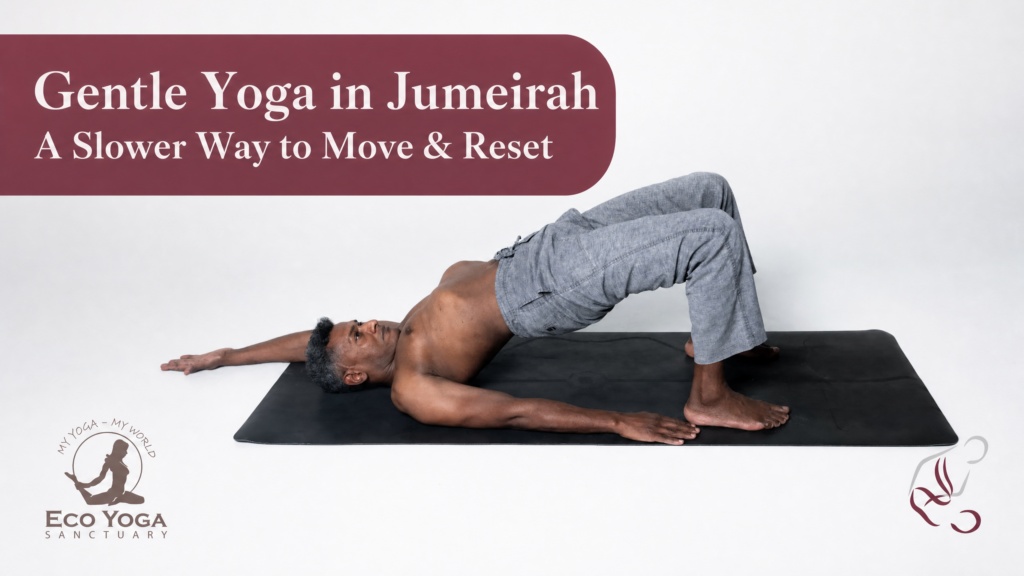
To practice Dwi Pada Pitham for glute activation and lower-back mobility, begin by lying supine on your mat with your knees bent and feet flat, ensuring your knees are positioned directly over your heels. As you inhale, press your heels firmly into the floor to lift your pelvis while maintaining a gentle chin tuck to keep the back of the neck long. Exhale to lower your spine slowly, vertebra by vertebra, until your lower back meets the floor, ensuring a controlled and mindful descent.
Glute Engagement vs. Front-Thigh Dominance
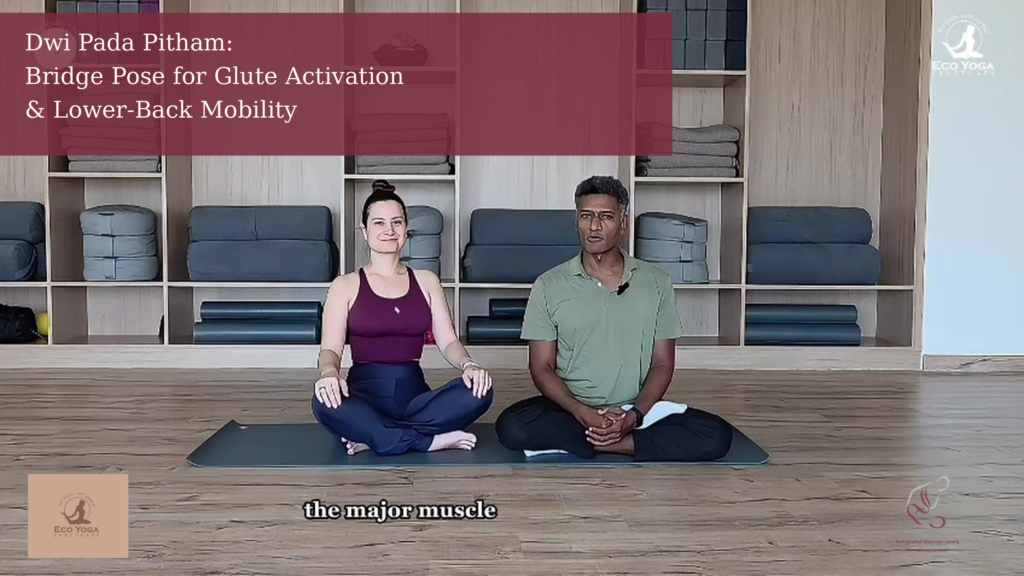
One pattern shown in the video is driving the lift primarily through the front of the thighs (quadriceps), which may allow the neck to slide back along the mat. Rather than treating the cue as a universal rule, use heel pressure as an invitation to observe where the work is felt. If the neck, back, or hips feel strained, lower the lift or pause and seek individual guidance.
Lineage and Scope
The approach to Dwi Pada Pitham shared here is rooted in the Viniyoga tradition, a lineage prioritizing the adaptation of yoga to the individual’s unique needs. This methodology was championed by T.K.V. Desikachar and developed by Gary Kraftsow through the American Viniyoga Institute. Kamal Saad integrates these principles with his experience as a manual osteopath and massage therapist to offer carefully observed movement education for modern bodies.
Frequently Asked Questions
Is Bridge Pose good for lower-back stiffness after a long drive in Dubai?
Bridge Pose can be one gentle option for exploring movement after long periods of sitting or driving, provided it feels comfortable for you. Use breath, a modest lift, and a slow descent to notice how your back, hips, and neck respond; seek individual assessment for ongoing or concerning symptoms.
How do I know if I am using my glutes correctly in Dwi Pada Pitham?
You can tell your glutes are engaged if you feel a firming in the buttocks and a sense of stability in your pelvis as you lift. A key indicator is the pressure in your heels; if you press down firmly, the glutes should naturally activate.
Should I try to lift my hips as high as possible in Bridge Pose?
No, in a therapeutic Viniyoga context, maximum height is not the goal. The focus should be on maintaining a neutral spine and ensuring the movement is supported by the glutes and the breath.
Can I practice Dwi Pada Pitham if I have a history of neck pain?
If you have neck concerns, ask a qualified clinician or appropriately trained teacher whether this movement is suitable for you. Do not force a chin tuck or a high lift; choose a comfortable range and stop if the position aggravates symptoms.
EXPERIENCE THE DIFFERENCE
Join Viniyoga Therapy Classes at Eco Yoga Sanctuary, Jumeirah
Practice asana in function — not just in form. Small groups, breath-led sequencing, and therapeutic adaptation to your unique structure.
ADVANCED EDUCATION
ITW Mastery Series
Deepen your anatomical knowledge and earn YACEP continuing education credits. For yoga teachers and advanced practitioners. Note: User must replace the placeholder link below before publishing.
Written by Kamal Saad, E-RYT 500 yoga teacher, American Viniyoga teacher, manual osteopath, and massage therapist, based on the public ITW biography.
ASANA IN FUNCTION SERIES
Up Next: Gentle Yoga in Jumeirah: A Slower Way to Move, Breathe, and Reset.
Discover how a slower, breath-centric practice can help you manage stress and restore your nervous system in the heart of Dubai.
Internal Linking: For more insights on spinal health, see our guide on [INSERT_LINK_TO_ARTICLE_2: Gentle Yoga in Jumeirah].
Further reading: Explore the foundations of this approach at the American Viniyoga Institute https://viniyoga.com/. For a deeper look at the relationship between Bridge Pose and spinal mechanics, cite https://pmc.ncbi.nlm.nih.gov/articles/PMC11981018/ in cautious plain language.