

Swing Yoga Journal · Spine Awareness
Swing Yoga for Your Spine: Move in More Directions
A thoughtful alternative to the automatic instruction to “just stretch your back.”
Your spine was not designed to live like the back of a chair. It was designed to participate in a changing conversation with the world around you.
The short answer
Swing Yoga at Crimson Chamber in The Sustainable City, Dubai, offers a supported setting to explore spinal movement in more than one direction. The hammock may create opportunities for gentle lengthening, rotation, side bending, extension, balance, and rest. It is not a cure for back pain, but it can be a mindful alternative to repeating the same familiar stretch when your body is asking for a broader movement conversation.
What movement does modern life ask of the spine?
Much of modern life happens in front of us. Phones, screens, driving, food preparation, and sofas can place the body in a small range of familiar positions. None of these activities is automatically wrong. The question is whether the spine has access to other directions often enough to feel adaptable and available.
When discomfort appears, the automatic response is often to fold forward or pull the knees to the chest. Sometimes that feels welcome. At other times, it simply repeats the flexed shape that has already dominated the day. A more useful question can be: “What directions has my spine been invited to move today?”
How can a hammock support spinal movement?
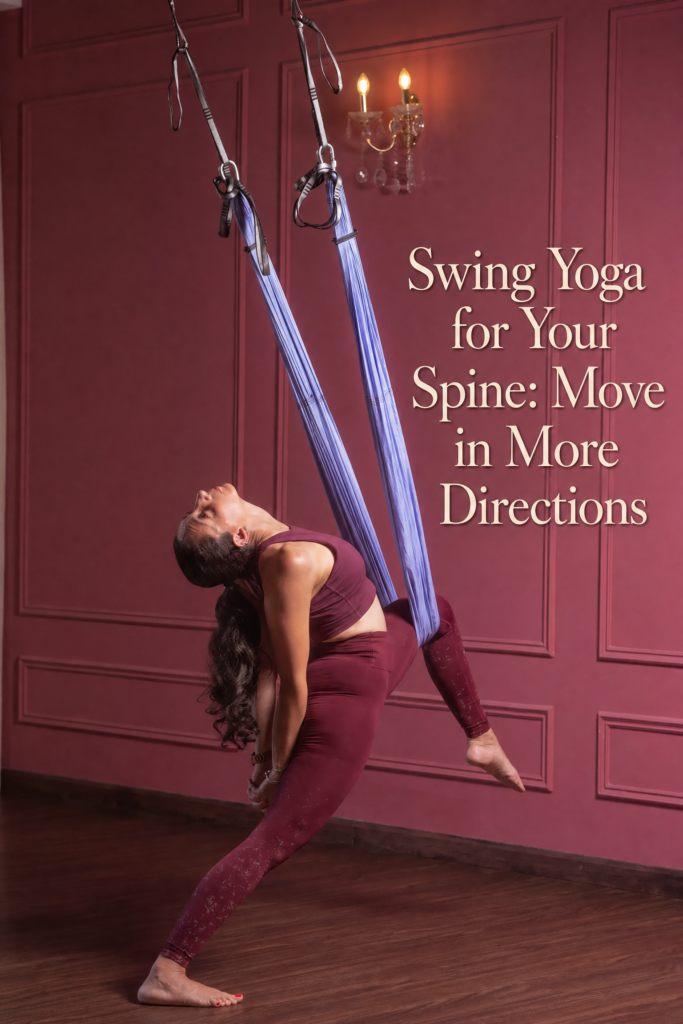
The hammock can take some of the weight that the body normally manages alone. In a gentle supported hang, a participant may experience a sense of space while the feet remain close to the floor or while the fabric shares the load. In a supported extension, the fabric can give feedback around the chest and upper back while the movement stays small and controlled.
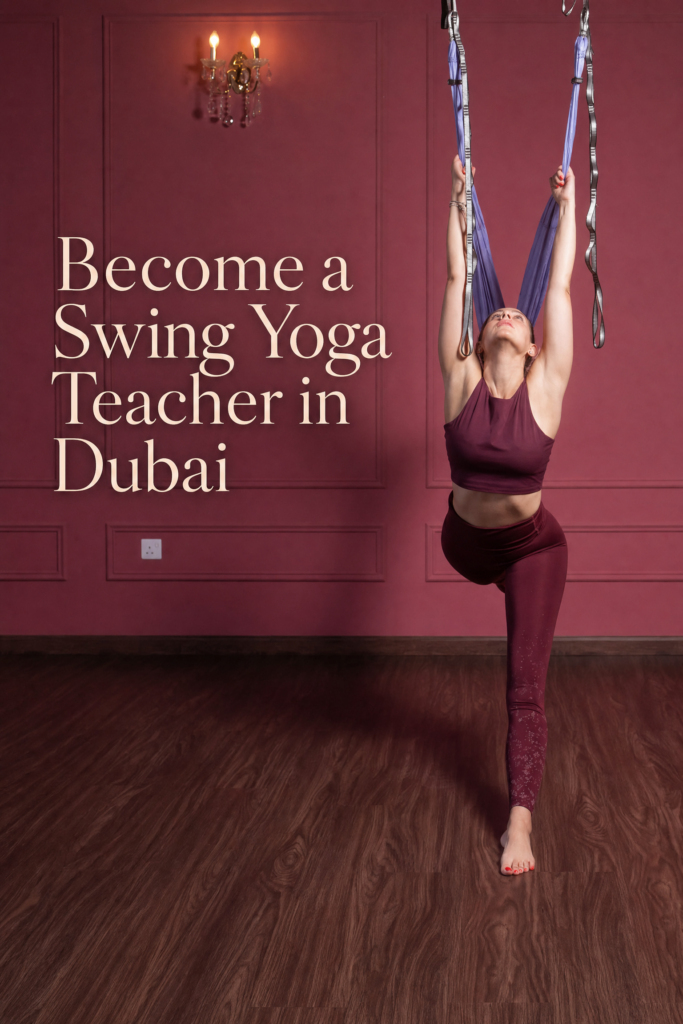
Swing Yoga is not only about hanging. A teacher may use the fabric for standing balance, lateral reach, rotation, or a slow return to neutral. The value lies in variation and attention, not in creating a dramatic shape or proving flexibility.
Why does breath matter in spine-focused practice?
The rib cage and spine move together during breathing. When you rush into a shape, it is easy to lose track of the breath and create unnecessary tension. When the hammock provides appropriate support, you may have more time to notice the expansion of the ribs, the length of the exhale, and the difference between effort and strain.
Breath is not a performance tool. It is information. If the breath becomes held, sharp, or anxious, that may be a sign to reduce the range, change the support, or rest. This is one reason a slow, guided class can be more useful than chasing a generic stretch sequence online.
What does an intelligent progression look like?
An intelligent progression starts with what the body can organise today. You might begin upright, use the hammock as a handhold, then explore a small lean. You may repeat the same movement on both sides, settle in a neutral position, and only then add a new option. There is no prize for moving quickly through the sequence.
For yoga teachers and movement professionals, the ability to build that progression is central. The 50-hour Swing Yoga Teacher Training with Yara Barqawi covers spine-focused practice, fabric safety, functional anatomy, foundational positions, and teaching methodology so that teachers can structure classes with more purpose.[1]
When is it better not to practise through discomfort?
New, severe, persistent, or worrying back symptoms need appropriate medical guidance. A group Swing Yoga class is not a substitute for assessment, diagnosis, or rehabilitation. Let the teacher know about relevant considerations before class, and choose an alternative or pause whenever a movement does not feel appropriate.
Mindful movement includes knowing when to step back. The most valuable practice may be a smaller range, a different position, or a conversation with a healthcare professional before you return to the hammock.
A more useful set of questions before you stretch
- How many directions has my spine moved today?
- Am I repeating the position that has already filled most of my day?
- Can I choose a smaller, more supported version and keep my breath easy?
- What would it mean to leave class feeling more aware, not merely more stretched?
Frequently asked questions
Can Swing Yoga help with back pain?
Swing Yoga is not a treatment for back pain and should not replace medical assessment. Some participants enjoy supported movement and a sense of space in the hammock, but suitability depends on the individual and their current condition.
Are inversions required in a Swing Yoga class?
No. A beginner-friendly class can include grounded, seated, standing, and supported options. An inversion is never the definition of a successful practice.
What should I do if my back feels uncomfortable during class?
Stop the movement and tell the teacher. A different variation, a rest position, or opting out may be appropriate. Seek professional medical advice for persistent, severe, or concerning symptoms.
Why do teachers need spine-focused Swing Yoga training?
Teachers need a clear understanding of safety, progressions, communication, and individual variation. The 50-hour training with Yara Barqawi includes spine-focused practice and functional anatomy as part of its stated curriculum.[1]